

Conserving and Protecting Trinidad and Tobago’s rich Biodiversity
Judith Gobin
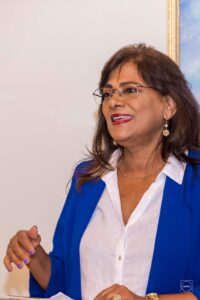
Good evening everyone and thank you for the honour of allowing me to speak at today’s function!
The conservation, protection and management of our biodiversity in T&T is critical to our future not only locally, but regionally. As key stakeholders, we are all challenged to play our part to sustain our biodiversity and resources of our terrestrial and ocean environments. We are obviously on our way and that is why we are celebrating today!
First, a few reminders: What is biodiversity and why is it important? All living things, including their habitats, ecosystems and relationships/communities. What is ecological connectivity– the ability of organisms and natural processes to move/take place freely across a landscape: access to resources, to migrate, and t maintain healthy populations (pretty much as for humans).
Biodiversity is essential for the processes that support all life on Earth, including humans. Without a wide range of animals, plants and microorganisms, we cannot have the healthy ecosystems (increased resilience) that we rely on to provide us with the air we breathe and the food we eat. Note: T&T and the Caribbean are hotspots for terrestrial and marine biological diversity.
How do we identify and measure biodiversity? Taxonomic studies or the ability to tell species apart are key to understanding biological diversity. No. of species, species richness (specific area or community), no. of functional roles in a system, species interactions, no. of habitats ad ecosystems, Genetic variations between and/within populations.
Wearing my Terrestrial hat (AWNC): a non-profit Land Trust in Trinidad and Tobago whose mission is “to preserve a part of the Arima Valley in its natural state; to create a conservation and study area; and to protect the wildlife therein for the enjoyment and benefit of all persons of this and succeeding generations“.
AWNC plays a major role in respect of a number of the key Biodiversity Targets: eg.Land conservation: Further to the original lands, we acquired additional forest land holdings (Arima & Aripo). AWNC now owns > 2500 acres of land, & the William Beebe Res. Station (Simla). Researchers have been coming since 1950’s, and continuing; with over 250 scientific publications from their research: birds, bats, butterflies, insects, frogs, vegetation/plant, and lizards etc. At the moment, we engage in: oilbird & bat monitoring (GPS tagging), mammalian camera traps. The breeding colony of the nocturnal Oilbird (Guacharo) continues to be a highlight to visitors, conveying the value of biodiversity & the need for conservation.
AWNC continues to:
- Protect and enhance the natural habitat for the benefit of biodiversity!
- Support biodiversity conservation & education activities- NGOs, schools, Univ. researchers.
- Biodiversity documentation– key data to be able to make long term informed decisions. Commission/support publications- Birds of Trinidad and Tobago, Guide to the Wild flowers of T&T.
Challenges: Quarrying (unmanaged and unlicensed): 20 yrs ago, granted the AWNC a 99-year lease of lands (Northern Range Forest Reserve) as compensation for encroachment by a State-owned quarry on AWNC’s lands. Continues to this day: devastating impacts, on oilbirds, mountains, affects the water supply, increased sedimentation, flooding, dust, road damage, communities..
My Marine hat (UWI): Marine biodiversity research (healthy oceans and ecosystems Target):on sandy beaches, rocky shores, intertidal and coastal areas and now the deep sea (> 200m). Deep sea research (& data collection) is extremely expensive.
Why do we need to know what exists there? The deep sea is a very special place with extreme conditions, yet biodiversity here is unimagined with a variety of deep-sea corals, sponges, mussels, crabs, fish and worms. We can discover species new to science? Did you know? L. judigobini (new giant tube-worm species)?: Grows to about 1m, at 3400m, 100 atm. and 40C, cold seep, fluids rich in hydrogen sulphide & methane were being released from the seafloor. L.judigobini lacks a mouth & digestive system & relies on symbiotic bacteria within its body to convert the seep chemicals into nutrients (chemosynthesis).
What is the value? The unique adaptations (for life in the deep) are encoded in the organism’s genetic material. Unique biochemical processes insights into novel enzymes or reveal special metabolic pathways (the new frontier). Marine derivatives (extracted genetic material) are extremely valuable and sought after in the pharmaceutical industry (including cancer drugs and cosmetics) and industrial products (enzymes, marine foods, etc).
Did you know? A number of Caribbean marine species, eg the sponge Cryptothethya crypta (cancer drug), have been contributing to this billion-dollar global industry; with no sharing of benefits to the source-countries/islands. potential marine genetic resource or MGR which also plays pivotal role in ensuring sustainable fisheries and aquaculture (improve breeding programmes, disease resistance. L. judigobini may yet be such a valuable resource?
This is now changed (Target:Increase the Sharing of Benefits From Genetic Resources, Digital Sequence Information): effective legal, policy, administrative and capacity-building measures needs to be put in place. BBNJ Treaty – global agreement.
Challenges: Deep sea ecosystems are among the most fragile and least understood on the planet. Exploitation and exploration in the deep sea often result in destruction even before we are aware of “what is actually living there”. Deep sea mining significantly threatens biodiversity conservation due to several factors: habitat destruction, pollution, noise and light pollution, and disruption of marine ecosystems.
What more can we do? The AWNC’s Simla research station is in danger due to the continuing quarrying. Our deep sea is being threatened and may be destroyed even before we know what exists there? Practical sustainability solutions (directly relates to the Montreal Targets); We need sustained actions, not one-off silver bullets:.
- Leadership by business is necessary to drive real governance. Globally companies and businesses are saying “no to deep sea mining”! Microsoft, BMW, Volkswagen, Volvo, Google, Samsung, Ford, Daimler, General Motors- are publicly expressing opposition to deep-sea mining, some pledging to avoid using minerals sourced from deep-sea mining.
- Sustainability- needs to be more widespread, with improved co-ordination (right hand/left hand) and overall governance: eg. Renewable energy projects?- still need to finalise policy/legislation to permit generation of electricity and to be able to feed it back to the national grid. Recycling wastes, but the problem at the source continues? Promoting local sustainable food systems to improve local farmer’s lives yet local products are more expensive! How can we help here?
- Can we revisit our Plastics and styrotex use in TT (still a major issue here in the region). Can we move towards no-use pledges, moratoriums ?
- Experts, NGOs and Gov’t collaboration, needs support (including financially) to enhance their efforts
- Support (financially and other) to strengthen Capacity Building. Data and research is needed for informed decision-making. Funding students at UWI, UTT, COSTAATT- on focused
- Strengthen communication/awareness-raising, education, SPESEAS, local NGO needs help. Maritime Ocean Collection- more environmental imagery / biodiversity into public spaces. (EUROCHAMTT- perhaps we could develop a node/network for submission of such projects?) . Science meets Business! Followed by Science meets Business meets Policy-makers!
Ladies and gentlemen, sincere congratulations on continuing to integrate sustainable practices into various aspects of your livese, including individual choices your businesses and work environment! There is still much to be done. Thank you for continuing to support sustainable actions and for considering new partnerships (in line with the Montreal targets!).
Together, we can make a difference as we strive to conserve, protect and enhance our natural habitats that sustain T&T’s very rich biodiversity (healthy oceans, rivers, lands and forests) for future generations !
Let us continue to be the best stewards safeguarding our island biodiversity treasures! .
THANK YOU VERY MUCH!